Simple Enrichment Ideas for Dogs and Indoor Cats
Use low-cost scent, food, movement, and choice-based activities to make everyday life more engaging.
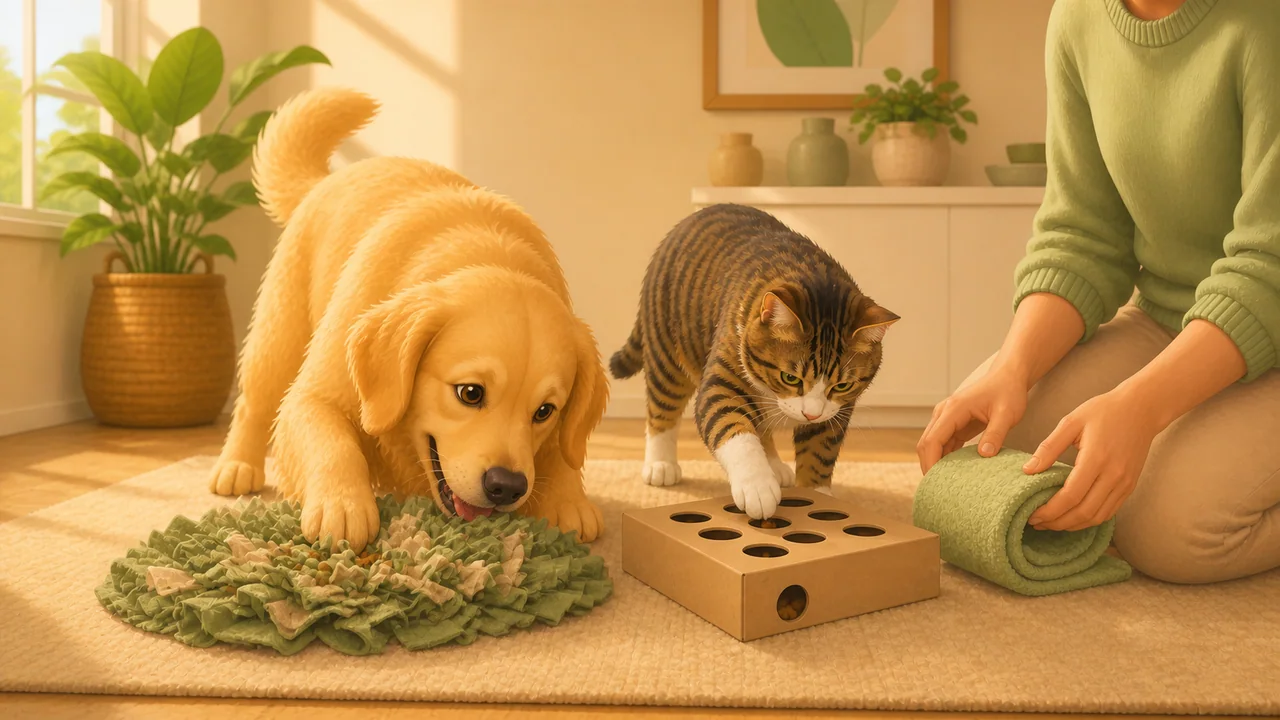
Enrichment Supports Everyday Wellbeing
Enrichment gives a pet safe opportunities to sniff, search, climb, chew, chase, solve, explore, rest, and make choices. It is not simply a way to tire an animal out. Good enrichment fits natural behavior and leaves the pet settled rather than frantic or frustrated. It can make indoor life more interesting, support confidence, and create positive interactions with caregivers. The best activity depends on species, age, health, personality, previous experience, and what the pet chooses to engage with.
More is not always better. A shy cat may value a quiet hiding place more than a busy toy, while an older dog may prefer a slow scent walk to repeated ball chasing. Watch body language before, during, and after an activity. Relaxed exploration, voluntary return, and the ability to stop are useful signs. Avoid forcing interaction, taking away valued items abruptly, or creating competition between household pets.
Turn Food into a Safe Search
Use part of the measured daily food allowance for simple foraging. Scatter kibble across a clean mat, hide small portions in easy cardboard containers, roll food in a towel, or use a stable puzzle designed for the pet. Begin with food visible and easy to reach. Increase difficulty only when the animal solves the current version without distress. Supervise new materials and remove anything that is being swallowed, shredded dangerously, or guarded from people or other pets.
Cats may enjoy several tiny feeding stations placed in quiet, elevated, or partially hidden locations. Dogs may prefer a sniff trail through one room or a slow feeder. Wet food can be spread on a suitable washable surface and chilled if advised for that food. Count all food toward the daily amount, clean reusable items, and avoid sharing puzzles when animals compete. Pets on therapeutic diets should use only ingredients approved by their veterinarian.
Use Scent, Movement, and Short Training
A sniff-focused walk lets a dog gather information at its own pace. When outdoor walks are limited, hide a familiar toy or create a short scent trail indoors. Cats can follow a wand toy that moves like prey: along the ground, behind furniture, then briefly into view. Finish the sequence with a catch and a small food reward when appropriate. Laser play can be frustrating if the cat never captures anything, so pair it with a tangible toy or food target.
Training is also enrichment when it is cooperative and brief. Teach a hand target, mat settle, carrier entry, chin rest, or another practical skill with rewards. Two minutes can be enough. Break the behavior into easy steps and stop while the pet is still successful. Avoid punishing mistakes or using exercise that involves repetitive high impact, sharp turns, or unsafe surfaces, especially for growing, senior, or physically limited pets.
Improve the Environment Without Adding Clutter
Cats benefit from vertical space, hiding choices, scratching surfaces, comfortable resting areas, and views that feel secure. A sturdy shelf, cat tree, covered bed, and window perch can create different zones in a small home. Dogs also need a predictable place where they can rest without being approached. Rotate a few toys instead of leaving every item out, and introduce one change at a time so you can tell what the pet actually values.
Offer choices where practical: two resting spots, more than one water station, or the option to leave an interaction. In multi-pet homes, duplicate important resources and separate them enough to reduce blocking. Check structures for stability, cords, sharp edges, and entrapment risk. Plants, essential oils, and household objects used as sensory enrichment must be confirmed safe for the species before they enter the pet's area.
Build a Simple Weekly Rotation
A workable plan might include one food-search activity, one short training session, one movement or play session, and protected quiet time each day. Rotate the format rather than constantly buying new products. On Monday, scatter feeding may be enough; on Tuesday, use a cardboard search box; on Wednesday, practice carrier entry. Keep a short record of engagement, difficulty, duration, and how the pet settled afterward.
Adjust the challenge using the smallest possible change. Add one extra hiding place, close one easy flap, or increase distance slightly. If a pet walks away, vocalizes repeatedly, paws frantically, guards the item, or cannot settle, make the task easier or stop. Enrichment should support the pet, not become a test it must pass. Illness, pain, heat, and household disruption can temporarily reduce interest.
When Behavior or Health Needs More Support
A sudden loss of interest in play, food puzzles, climbing, walks, or social contact can be an early sign of pain or illness. Contact a veterinarian if the change persists or is accompanied by reduced appetite, limping, hiding, altered sleep, vomiting, breathing changes, or unusual elimination. Also seek qualified help for aggression, severe fear, repetitive self-injury, destructive escape attempts, or guarding that puts people or animals at risk.
Enrichment can improve quality of life, but it is not a substitute for medical assessment or an individualized behavior plan. A veterinarian can check for physical causes and refer to an appropriate behavior professional when needed. Bring notes or short videos recorded safely. They can show which situations trigger the behavior and which activities help the pet recover calmly.