Did Someone Feed the Pet? A Simple Household Handoff
Make household feeding handoffs clearer with a named caregiver, an actual meal time and an honest status. Includes a simple shared-note example.
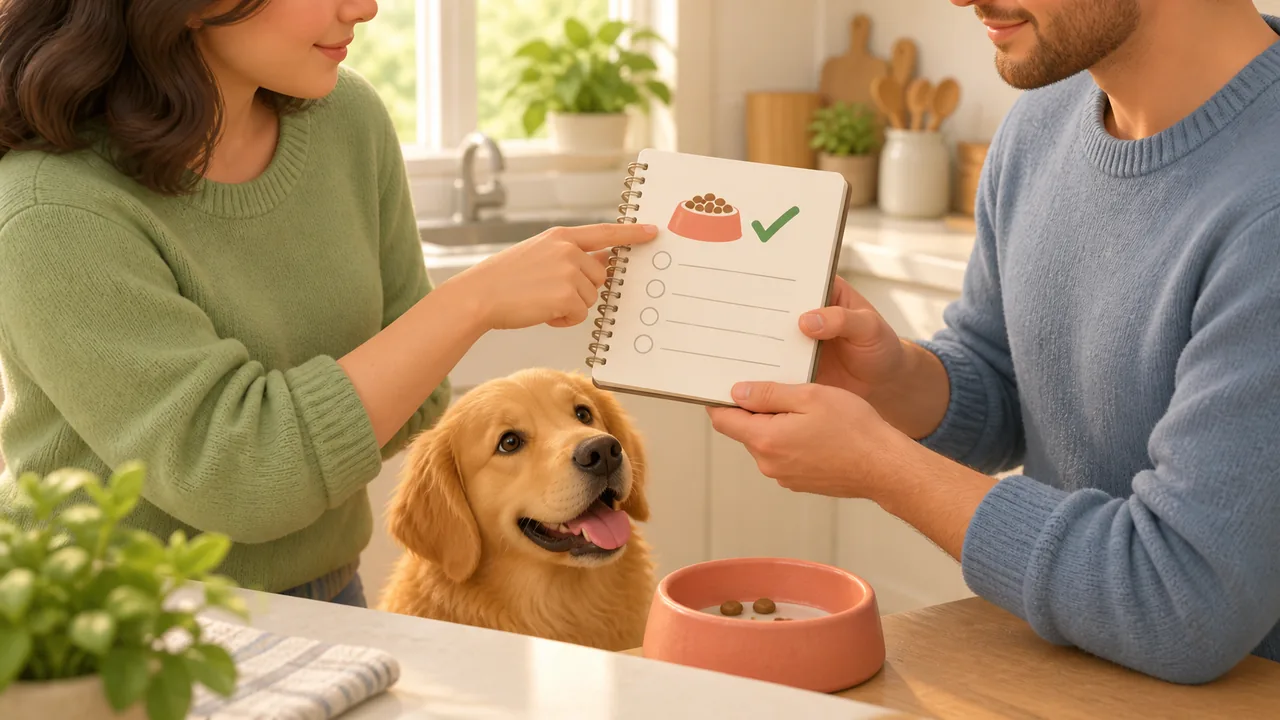
A Useful Starting Point
“I thought you fed them” and “I was about to do it” describe different situations, but a hurried message can make them sound alike. A useful household handoff separates the plan from what actually happened. It also gives everyone a place to check before acting.
You can use a whiteboard, a paper sheet or a shared note that the household can access. This is a suggested communication routine, not a promise that any particular pet app supports family accounts or live sharing.
Agree on One Place to Check
Choose a place that the people doing the feeding will realistically use. The important decision is which record is current. Several overlapping notes can leave someone reading yesterday's update while another person assumes everyone saw a new message.
Put the date and pet's name at the top. Use separate entries for each pet, even if they have meals at the same time. If someone cannot update the chosen record, agree how they will tell the next caregiver and who will add the information. Do not share an account password to make a tool behave like a family-sharing service.
Name the Person, Then Record the Action
Assign a caregiver to a planned meal, but do not mark it as served in advance. A reminder, an alarm or a tick beside “will feed” is not proof that food reached the bowl.
AAHA's nutrition-history guidance specifically includes the people who provide meals and extras. Naming the caregiver in a household note makes that information easier to explain later. (AAHA nutrition history)
After serving, add the actual time and what was offered. If you did not observe eating, say so. “Served” is a completed action by a person; “ate” is a separate observation about the pet.
Use Plain Statuses
This fictional example demonstrates a handoff format. It is not a feeding schedule or portion recommendation.
Useful status words include planned, served, and uncertain. Add a separate consumption note if someone observed it. Avoid a single “done” checkbox when household members use it to mean different things.
When a correction is needed, leave a short explanation: “Updated at 8:10 a.m. after Alex confirmed the serving time.” That is clearer than replacing uncertainty with an unexplained checkmark.
Include Extras Without Creating Blame
A handoff can miss snacks even when main meals are recorded. Keep a place for extras and identify the food and amount when known. AAHA discusses including treats within the daily food plan; ask your veterinary team about the plan appropriate for your pet rather than inventing a new allowance. (AAHA prevention guidance)
Use neutral language when an entry is missing. “Can you confirm whether you gave a snack?” gathers information. A blame-focused exchange may leave the next person with an argument but still no clear update.
Make the food itself identifiable, too. Keep the original packaging and label details instead of relying only on an unlabeled container. The FDA describes why those identifying details matter. (FDA pet food storage)
Have a Plan for Uncertainty
If the record is unclear, contact the person who may have fed the pet and check the available information. Do not treat an empty bowl, a pet asking for food or a missing entry as proof of a particular meal.
This article cannot decide whether to give, skip or change a meal when the facts are uncertain. That decision may depend on your pet's individual care instructions. Follow those instructions and ask the veterinary team when you need advice, especially when feeding is linked to medical care.
Keep the Routine Small Enough to Use
Review the handoff together after trying it. Is the current date obvious? Does everyone understand the status words? Can someone find the last confirmed serving without reading a long conversation? Remove fields nobody needs, but keep the distinction between a plan, a confirmed action and an unknown event.
The purpose is clearer communication, not a perfect activity score. One honest update that reaches the next caregiver is the core of the routine.