Pet Food Diary for Dogs and Cats: What to Record
Keep a useful pet food diary with clear meal times, food details, portions offered and leftovers. Includes an example and a simple daily template.
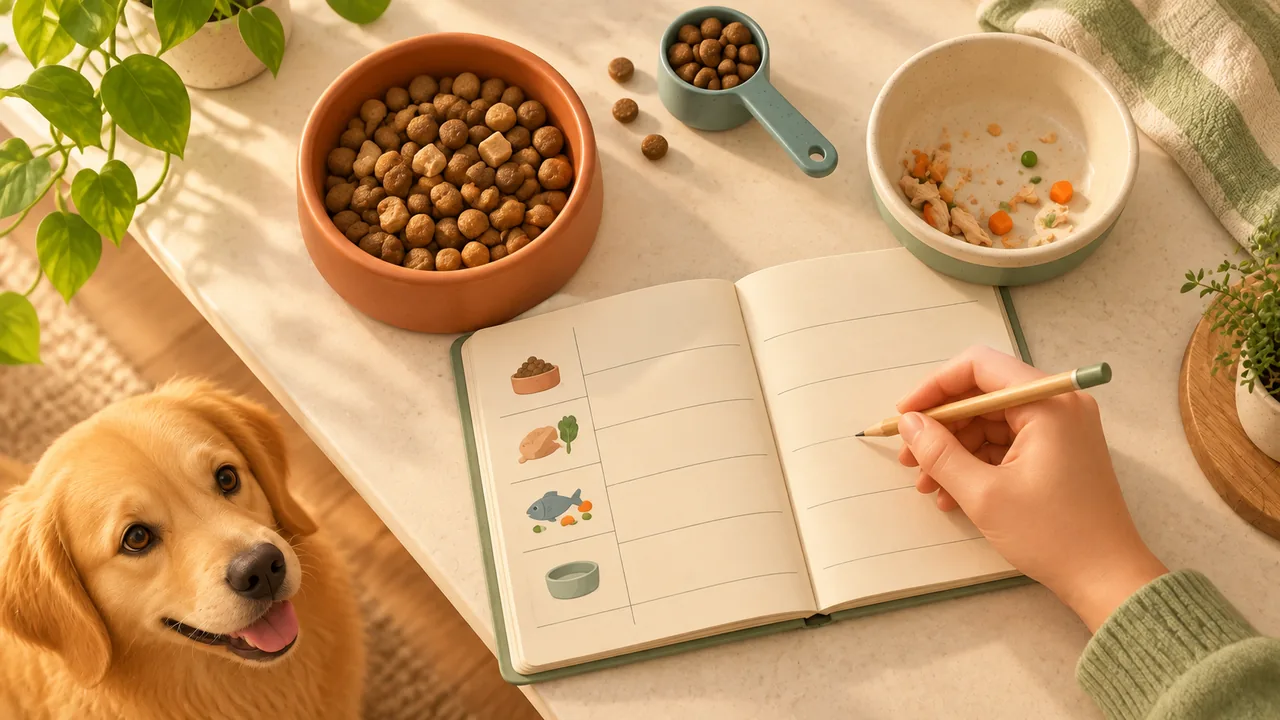
A Useful Starting Point
A useful food diary answers a small set of questions: what was offered, when, by whom, and what you actually saw your pet eat. It does not need to turn every meal into a project. One clear note is more useful than a detailed entry assembled from guesses at the end of the week.
The template below is a suggested way to organize home observations. It is not a feeding prescription, calorie calculator or diagnostic tool. Keep following your pet's existing veterinary feeding instructions, where applicable.
Start with the Food, Not a Score
AAHA's nutrition-history guidance includes ordinary meals, treats, other foods and the people involved in feeding. A diary limited to the main food can leave out part of that picture. (AAHA nutrition history)
Give each food a recognizable name. “Wet food” may be enough for a quick reminder, but a product name and variety make the note easier to interpret later. You can keep a label photo separately instead of rewriting the same details at every meal. When the product changes, use a new description rather than silently changing what an old entry means.
Separate What You Served from What Was Eaten
Write the portion with its unit: grams, part of a particular can, or another measure you actually used. Do not replace a rough observation with a precise number simply because the form has a number field.
Keep two separate ideas: food offered and food consumed. An empty bowl does not identify which pet ate from it. A portion left out while you were away may have been eaten, spilled or shared. Write “not observed” when you cannot tell. If you measure leftovers, note any reason the comparison might be unreliable, such as spilled food or added water.
A Simple Meal Entry
This is a fictional example, not a real pet record or a recommended portion. The numbers only illustrate how to distinguish fields.
Your diary can be shorter. If you know only that a meal was served, record that fact and leave consumption unknown. Avoid presenting the example's estimate as a measurement of everything Milo ate that morning.
Make Dates and Missing Entries Honest
Use the time the meal happened. If you add yesterday's meal now, record yesterday as the event date and keep a note that it was entered later. If the time is uncertain, “evening, exact time unknown” is clearer than an invented timestamp.
A blank entry means there is no entry. It does not prove that the pet missed a meal. Likewise, a note that says “usual food” describes a routine, not evidence of what happened on a particular day. If another caregiver supplies missing information, identify it as their report rather than something you observed yourself.
Keep Extras and Product Details Findable
Use a short separate line for a snack or food reward, with whatever amount you actually know. The goal is an honest record, not an impressive-looking complete sheet. Ask other caregivers to add their information without treating omissions as blame.
Keep the original food packaging, including its identifying details. The FDA explains that product and lot information can help identify a food if a problem needs reporting. A diary entry is not a substitute for those details. (FDA pet food storage)
Turn the Diary into a Conversation
Before a veterinary appointment, mark questions you want to discuss and leave the original entries available. Ask the clinic whether it wants a particular diet-history form or recording period. WSAVA provides nutrition-history resources for veterinary assessment; this home template does not replace them. (WSAVA nutrition resources)
Start with this reusable line: pet | meal date and time | food | amount offered and unit | leftovers or observation | extras | caregiver | uncertainty. Add detail only when it helps answer a real question. Do not use the diary alone to diagnose a food reaction or decide treatment, and do not postpone veterinary advice while trying to complete it.