Which Toys Does My Pet Like? A Simple Play Journal
Use a simple play journal to notice your pet's toy choices. Record what happened, separate observations from guesses and update preferences over time.
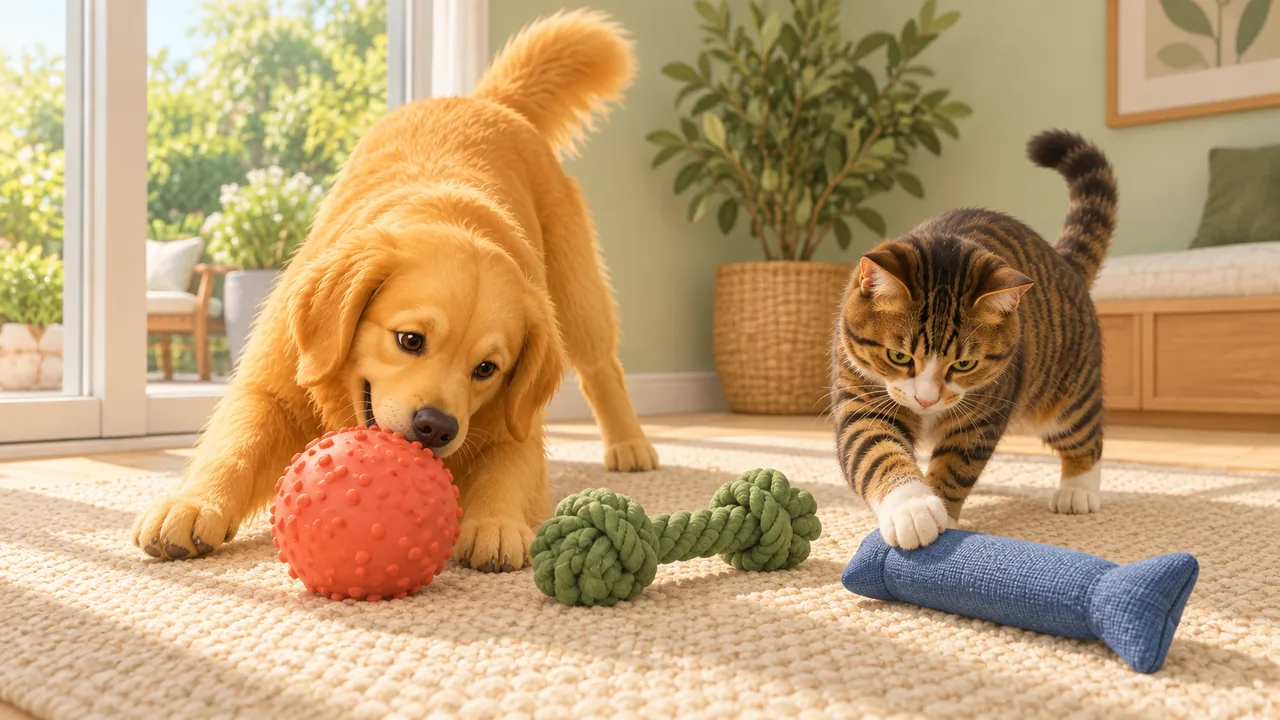
A Useful Starting Point
A toy can sit untouched for days and then become interesting when it moves differently or appears in another room. Before deciding your pet “hates” it, write down what actually happened. A small play journal can help you describe choices more accurately than a permanent favorite-toy label.
This is a casual observation method, not a behavior assessment or a test your pet needs to pass. You do not need to buy a new collection of toys or record every interaction. Start with a question you are genuinely curious about.
Describe the Toy and the Situation
Give toys recognizable names: “soft blue ball” is easier to identify than “toy 1.” Record whether you offered it, moved it or found your pet playing independently. Note relevant context, such as another pet being nearby or the room being unusually busy, without assuming that context caused the response.
Cats Protection describes individual play preferences and suggests observing toy choices in its care guidance. That supports paying attention to the individual cat, not assuming every cat wants the same activity. It does not validate a home scoring system. (Cats Protection behavior guide, pages 39–40)
Write Actions Before Interpretations
“Approached, sniffed, then walked away” tells you more than “boring.” “Brought the ball back twice” is more specific than “loves fetch.” Keep a tentative interpretation in a separate sentence if it helps, but do not let it replace the observation.
Include the option not to participate. For cats, use suitable toys and supervise play, including wand-style toys; put those away afterward. Cats Protection's play guidance covers practical toy use and safety. (Cats Protection: cats and play)
Let your pet leave the interaction. Do not keep presenting an activity simply to fill the journal or obtain a better-looking result. A short entry about choosing to rest still records something you observed.
Try a Small Observation Table
The following entries are fictional. The timings are descriptions of imagined sessions, not recommended exercise durations or a scientific comparison.
For your own note, use: date | pet | toy or activity | setting | observed actions | how the interaction ended. Add duration only if it helps your question. Do not pretend a rough estimate was precisely timed.
Keep Preferences Specific and Revisable
After several observations, write a modest summary you can trace to the entries. For the fictional dog above, “Milo has sometimes chosen the soft blue ball during living-room play” is supported. “Milo always prefers blue toys” is not: the notes did not compare colors, and one declined session remains part of the record.
When your experience changes, update the summary and retain the dates behind it. You can remember something meaningful about your pet without turning it into an unchanging personality trait. Keep individual pets' observations separate, even when they use the same toys.
Share What You Know, Not an Invented Story
A useful note for another caregiver might be: “He has brought this ball to me during play; offer it and see whether he chooses it.” It leaves room for today's response instead of telling the caregiver what must happen.
If you use a digital tool to summarize the journal, check that it has not invented a behavior or strengthened “sometimes” into “always.” A record that says a pet likes a bell does not establish that the pet chews it, sleeps beside it or prefers its color. Those are separate claims needing separate observations.
Notice Changes Without Diagnosing Them
A play journal is not a way to rule out illness. RSPCA advises seeking veterinary advice when a dog's behavior changes; the journal cannot tell you the cause. (RSPCA dog behavior guidance)
For either a dog or cat, bring concerns about health or behavior to your veterinary team rather than interpreting a table as a diagnosis. You do not need a complete journal before asking for help. The value of these notes is simple: a clearer account of what you noticed, with room for what you do not yet know.