Common Foods That Are Dangerous for Dogs and Cats
Know which common foods can harm pets, how to prevent accidental exposure, and what to do if one occurs.
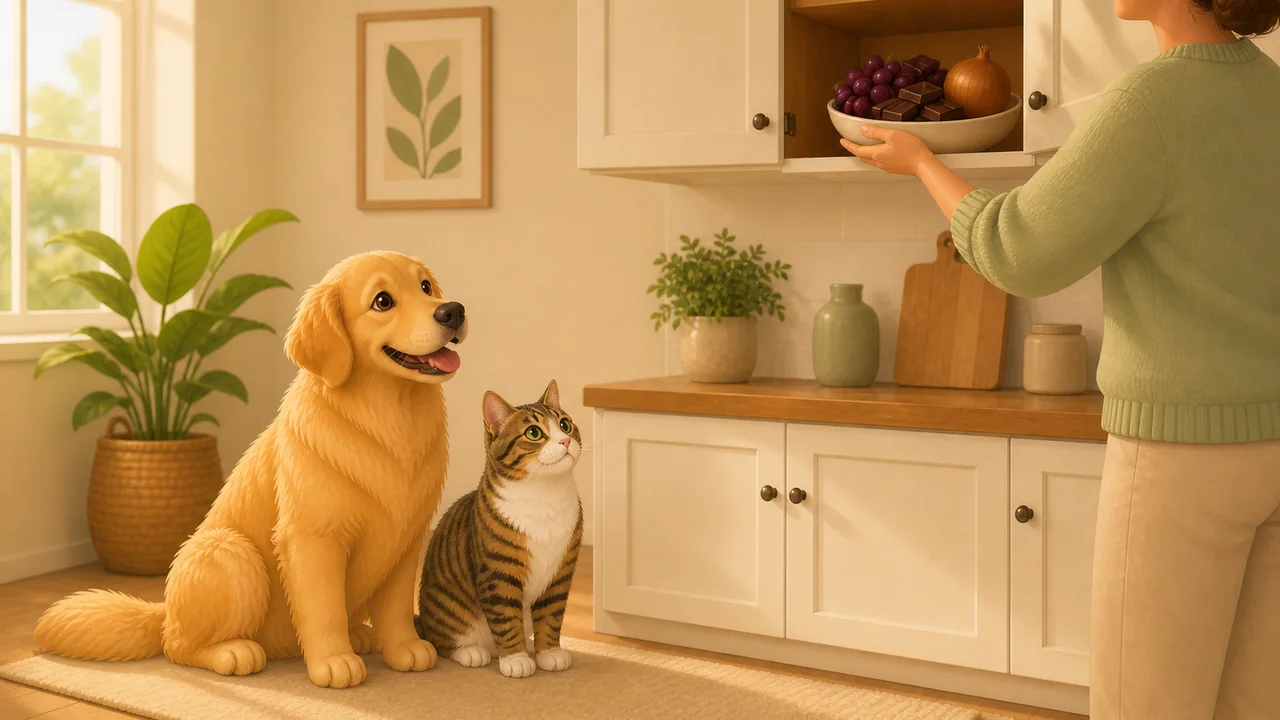
Why Ordinary Kitchens Create Real Risk
Foods that are safe for people are not automatically safe for dogs or cats. A pet may steal an ingredient, eat a discarded wrapper, receive a well-meant treat, or reach a bag left in a car. Risk depends on the substance, amount, concentration, pet size, species, and individual health. Because several toxic effects begin before obvious signs appear, waiting to see what happens can lose valuable time. Prevention and a quick call to a veterinarian or animal poison service are safer than guessing at home.
Keep the original package when possible. Ingredient lists matter because the danger may be a sweetener, raisin, alcohol, caffeine, or other component rather than the product name. Do not rely on social media dose charts. They may omit differences between products and pets. If an exposure occurs, record what was eaten, the estimated amount, the time, your pet's weight, and any symptoms, then seek professional instructions.
Chocolate, Caffeine, Grapes, and Raisins
Chocolate and other cocoa products contain methylxanthines, and darker or baking chocolate is generally more concentrated than milk chocolate. Coffee, tea, energy products, and caffeine tablets can also be dangerous. Signs may include restlessness, vomiting, a fast heart rate, tremors, or seizures, but the absence of early signs does not confirm safety. Call for advice with the exact product and amount rather than estimating risk by the size of the wrapper.
Grapes and raisins can cause serious kidney injury in dogs, and a reliable safe amount has not been established. They can appear in bread, trail mix, cereal, cookies, and snack bars. Treat any suspected dog exposure as a reason for prompt professional advice. Cats are less likely to eat these foods, but that is not a reason to leave them accessible. Store concentrated baking supplies and dried fruit in closed cupboards, not open bowls or low pantry shelves.
Onions, Garlic, Alcohol, and Yeast Dough
Onions, garlic, chives, and related plants can damage red blood cells in dogs and cats. Fresh, cooked, powdered, and concentrated forms all matter, and seasoning mixes may contain them even when pieces are not visible. Cats can be especially sensitive. Effects may be delayed, so normal behavior immediately after eating does not rule out a problem. Avoid sharing soups, sauces, baby foods, gravies, or leftovers until every ingredient is checked.
Alcohol can be found in drinks, desserts, extracts, fermenting material, and some household products. Unbaked yeast dough can expand in the stomach and produce alcohol as it ferments. Both situations require urgent veterinary guidance. Keep pets away from party glasses, spills, brewing supplies, and rising dough. Guests and children should know that a small taste for a person may represent a meaningful exposure for a small animal.
Xylitol and Hidden High-Risk Ingredients
Xylitol, sometimes listed as birch sugar, is a sweetener found in some sugar-free gum, candy, baked goods, toothpaste, supplements, and nut butters. In dogs it can cause a rapid, dangerous drop in blood sugar and may also injure the liver. Product formulations change, so read the current label every time. If a dog may have swallowed a xylitol-containing product, seek emergency advice immediately and do not wait for weakness, collapse, or vomiting.
Macadamia nuts can also make dogs ill. Very salty foods, fatty leftovers, cooked bones, moldy food, and large amounts of dairy may create different medical hazards even when they are not classed in the same way as a specific toxin. Cats should not be offered dog treats as a nutritional substitute, and neither species needs rich table food. The simplest household rule is to use pet-appropriate treats and confirm uncertain ingredients before sharing.
Build a Safer Home Routine
Store risky foods in closed cabinets or rigid containers. Use a lidded trash bin, clear plates promptly, and keep handbags, lunchboxes, and grocery bags off the floor. During cooking, give pets a separate resting area or enrichment activity. Label pet-safe foods for caregivers, and leave written instructions that table scraps are not allowed. Check floors after parties, holidays, and children's activities, when wrappers and dropped snacks are more common.
Prepare an emergency note with your regular veterinarian, the nearest emergency clinic, and an animal poison service available in your country. Save your pet's current weight and important health conditions. This preparation is useful because decisions may depend on details that are hard to collect under stress. It also helps every household member respond consistently rather than searching the internet while an exposure is unfolding.
What to Do After a Possible Exposure
Remove access without putting yourself at risk, collect the package or a photo of the label, and call a veterinarian or animal poison service. Do not induce vomiting, give salt, oil, milk, charcoal, or another home remedy unless a veterinary professional specifically instructs you. Vomiting can be unsafe with some substances or in a pet that is drowsy, seizing, or having trouble breathing. Follow the destination and timing advice you receive, even if your pet still looks normal.
Go to emergency care immediately for collapse, tremors, seizures, marked weakness, breathing difficulty, repeated vomiting, severe agitation, loss of coordination, or altered awareness. This guide cannot calculate an individual toxic dose or replace case-specific advice. Fast, accurate information about the pet and product gives the veterinary team the best chance to choose appropriate care.